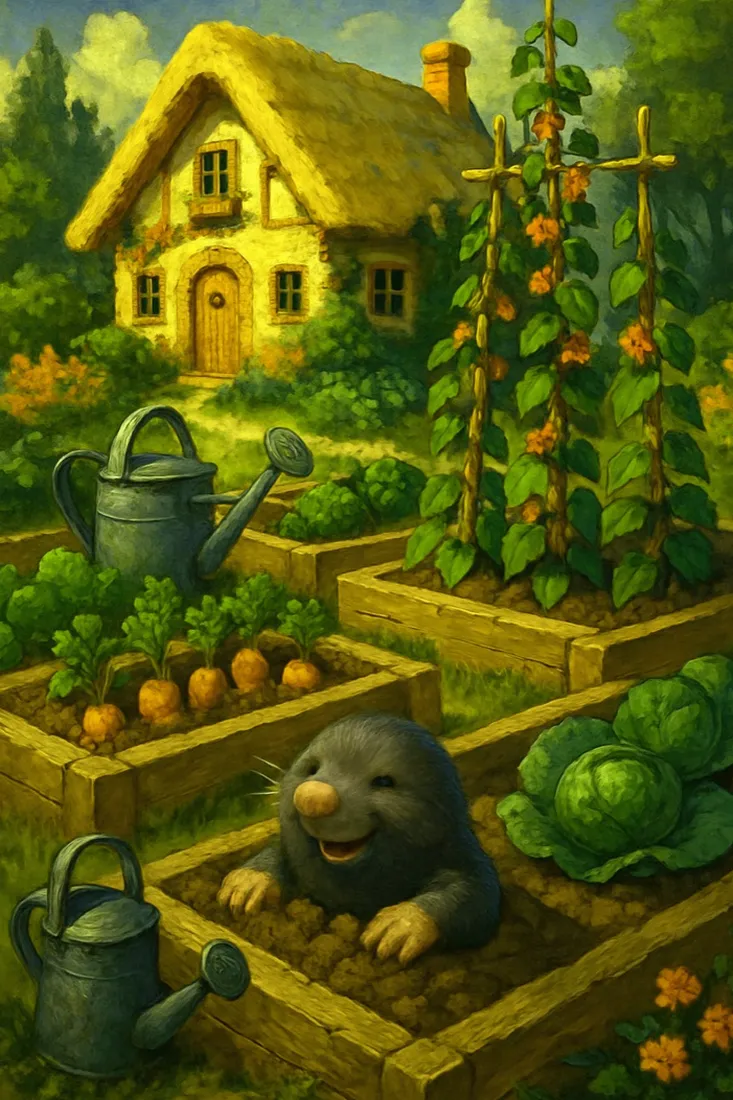
There is a particular satisfaction in Molehill Empire 2 that we struggled to name for the first few days. It is not the scale, because your garden starts small and stays fairly modest for a while. It is the tidiness. A row of freshly planted beds, all watered, all ticking along, with a short queue of customers waiting for whatever comes up first, feels like a well-kept allotment at seven in the morning.
The game comes from upjers, the German studio behind several long-running farm and animal titles, and it is the sequel to a garden game known in its home country as Wurzelimperium. The new version keeps the original's patient spirit but surrounds it with more to discover: quests that unlock features one by one, gnomes with jobs, and a community of other gardeners to trade with.
Bare soil, a watering can and the first queue at the fence
You open on empty fields and a handful of seeds, and the loop is clear within minutes. Plant fruit and vegetables in your beds, water them, wait, harvest, then sell the produce to customers who queue up to buy. The money goes back into seeds, more beds and eventually more gardens. It is simple enough that we explained it to a relative over a cup of tea in one sentence, and she was planting carrots before the tea was cold.
The interesting part is that the queue gives every harvest a purpose. Rather than piling vegetables into a faceless store, you are trying to fill particular requests, which nudges you to plant a sensible mix instead of whatever grows fastest. It turns a passive timer game into a gentle bit of planning: what will people want when I come back after lunch, and have I got enough of it in the ground?
Weeds, aphids and the pleasure of a small fuss
A garden that only grew would be dull, and Molehill Empire 2 knows it. Weeds and aphids turn up to interfere with your beds, and clearing them becomes part of the routine. It is never punishing; think of it as the virtual version of pulling a dandelion on your way to the shed. But it gives a visit something to do beyond pressing harvest, and it makes the garden feel looked after rather than merely operated.
We found ourselves returning more often than we planned simply to keep things neat. That is the hook, and it is a kindly one. Nothing collapses if you skip a day; the beds wait for you. The game rewards attention without scolding absence, which is exactly the balance a garden game should strike, and one that several bigger farm titles get wrong by making you feel guilty for having a life.
Gnomes with jobs, honey and a herb garden
The surprises arrive through quests, which unlock new features as you go. Garden gnomes are more than ornaments here: you can train them into specialised helpers, including singing gnomes, and they are tied into some of the game's stranger corners, such as growing monster fruit. Further along there is honey production and a medicinal herb garden, each adding another small rhythm to your day.
And then there is snail racing, which we will not pretend to understand fully but which we enjoyed enormously. It is the kind of whimsical side activity that gives the game its personality. These layers mean the garden you have after a month looks and feels different from the one you started with, which matters in a genre where the danger is always sameness. Molehill Empire 2 keeps handing you new little reasons to log in.
Trading over the hedge with the neighbours
Molehill Empire 2 is properly sociable if you want it to be. You can trade with other players, use the built-in messenger, and create or join a guild that works through cooperative tasks together. Trading is particularly useful early on, when a shortage of one crop can hold up a customer order and a neighbour has a surplus.
We joined a guild in our second week and found it friendly and low-pressure; people swapped produce, chatted about what they were growing and nudged each other through the cooperative tasks. But the solo game stands up perfectly well too. You can garden alone for weeks and never feel locked out. As ever, the shop offers ways to hurry things along, and the reminders are present but rarely pushy, which is why our fairness score sits respectably rather than perfectly.
Your first seven days in Molehill Empire 2
- Plant your first beds with a mix of quick crops, water every one, and fill the customers already waiting.
- Clear weeds and aphids whenever you see them; tidy beds keep the garden productive and the routine pleasant.
- Follow the quest line closely, since it unlocks most of the new features rather than leaving you to hunt for them.
- Spend early earnings on extra beds and seeds before decorations; a bigger garden pays for prettiness later.
- Look for a guild or a friendly trader by the end of the week to smooth out awkward crop shortages.
What we love
- The queue of customers gives every harvest a small, satisfying purpose.
- Quests unlock honey, herbs and gnome jobs at a pleasantly steady pace.
- Weeds and aphids add care without turning the garden into a chore.
- The same garden plays in a browser and in the mobile app.
What grates
- Early sessions are short enough that the first evening can feel slightly thin.
- The shop reminders are polite but they do keep turning up.
- Some of the stranger features take a while to explain themselves clearly.
Who Molehill Empire 2 suits
Anyone who enjoys a well-kept garden and the small rituals of looking after it. It suits beginners because the loop is easy to learn, and it suits patient players because the quests keep unlocking new corners. If you like popping in for five minutes several times a day, this is your plot.
Where we land on Molehill Empire 2
Molehill Empire 2 is our top pick because it understands what a garden game is for. It is calm, tidy and quietly surprising, with customers that give your harvests meaning, pests that give your visits purpose and a stream of quirky unlocks that keep the garden changing. It never shouts, never punishes a missed day, and plays on whatever device is nearest. For a first plot, we cannot think of a kinder one.