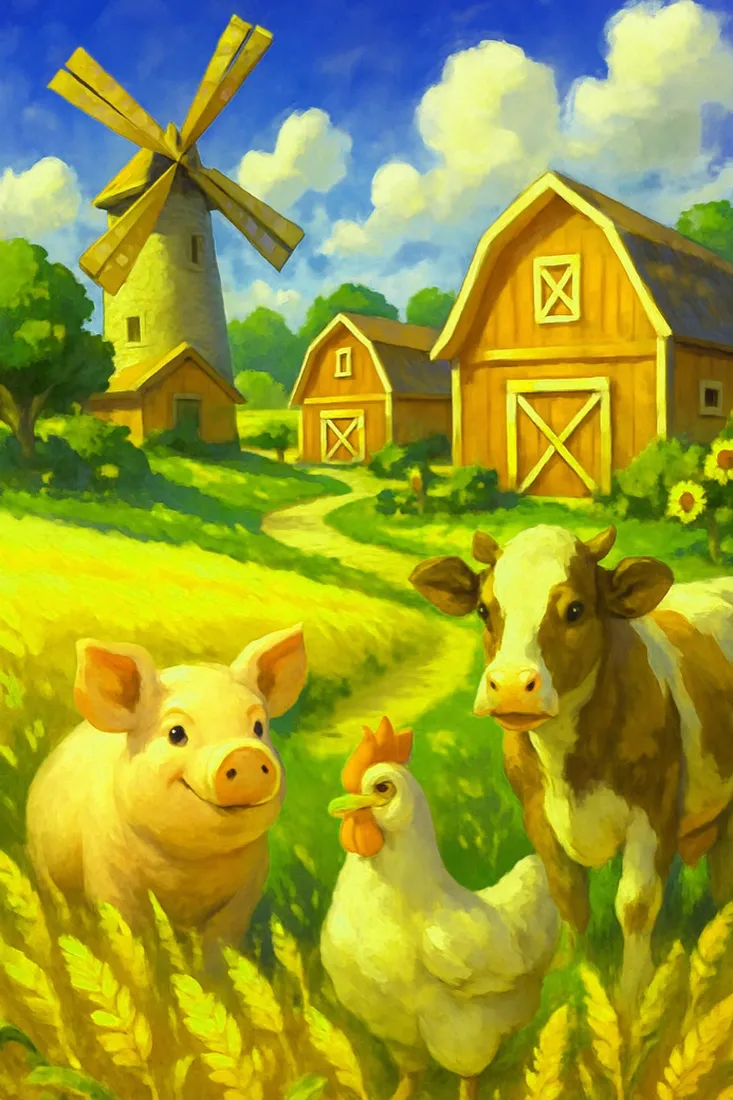
Gardens, farms and animal parks look similar from the gate but feel very different once you are inside. Here is how to tell which kind of tending will bring you the most pleasure.
Three kinds of tending, one shared pleasure
All six games on the Hayloftalmanac shelf share a core idea: you look after something living, it grows while you are away, and you return to see how it is getting on. That pleasure is ancient and very human, the same instinct that makes people keep allotments, window boxes and backyard hens all across Britain. But the games divide into three quite different families, and choosing the right family matters more than choosing the right game.
The garden game is about beds, timing and care. Molehill Empire 2 is our example, and it is the most intimate of the three: small plots, frequent visits, close attention. The farm game is about production and economy. My Free Farm, Big Farm and Farmerama all sit here, though they range from deep to cheerful. And the menagerie game, My Free Zoo and Horse Farm, puts animals and their homes at the centre.
Each family suits a different temperament. Understanding which one you are drawn to will save you the disappointment of starting a game that is perfectly good but simply not your kind of pleasure. So before you look at individual scores, ask yourself a simpler question: what do you most want to tend?
The garden: small plots and close attention
Garden games reward people who enjoy detail. In Molehill Empire 2, your world is a set of beds, and the satisfaction comes from keeping them productive, tidy and free of weeds and aphids. You water, you harvest, you fill orders for the customers queuing at the fence. The scale is human and the visits are short.
This suits players who like frequent, light contact with a game. If you are the sort of person who checks the tomatoes on the windowsill every morning, a garden game will feel natural. It also suits beginners, because the loop is easy to grasp and there is little to overwhelm you in the first few days. The depth arrives gradually, through quests and unlocks.
The garden is less suited to people who want grand projects. You will expand, but you will not build an estate. If you dream of a sprawling operation with a dozen buildings humming away, the farm family will serve you better. If you want a quiet, well-kept corner to return to between other things, the garden is ideal.
The farm: fields, barns and a ledger
Farm games are the broadest family and the one most people picture when they think of the genre. Fields, animals, production buildings and a market tie together into an economy. The pleasure is partly in tending, but mostly in running a system: deciding what to grow, what to feed whom and what to sell.
Within the family, there is a lot of range. My Free Farm is the planner's choice, with a deep chain from fodder to finished goods. Big Farm is the builder's choice, with dozens of buildings and a strong cooperative community. Farmerama is the cheerful choice, lighter on economy and heavier on charm, crafts and decoration. All three are farms, but they feel very different to play.
If you enjoy a little mental arithmetic, a sense of momentum and watching numbers grow, a farm game is your home. If spreadsheets make you sigh, lean towards Farmerama, which keeps the farming light and the colours bright. And if community matters to you, Big Farm's cooperatives are the warmest place on our shelf to find fellow farmers.
The menagerie: animals first, everything else second
In animal-focused games, the creatures are the point and everything else exists to serve them. My Free Zoo gives you hundreds of species, enclosures to build and a breeding centre for the rare ones. Horse Farm narrows the focus to horses and ponies, with feeding, grooming, breeding and a ranch full of guests around them.
These games suit people who feel more for the animals than for the harvest. If the idea of a baby panda or a newborn foal makes you smile more than a perfectly timed crop rotation, start here. Menagerie games also tend to have a calmer daily round: feed, clean, groom, admire. The building projects are about homes for animals rather than production lines.
The trade-off is depth of economy. Neither My Free Zoo nor Horse Farm offers the intricate chains of My Free Farm, and that is fine. They offer something different: attachment. Our reviewers grew far more fond of individual animals in these games than of any field of carrots, and that emotional pull is what keeps players coming back for months.
Trying more than one without overwhelming your week
Many players end up with two games running side by side, and it can work beautifully if you choose complementary ones. A garden and a menagerie pair well: short garden visits through the day, a calm animal round in the evening. A deep farm and a light one also combine nicely, with My Free Farm for planning and Farmerama for unwinding.
What rarely works is running two games from the same family at the same intensity. Two demanding farms will compete for the same evening, and one usually gets neglected. If you want to try several, give each a fortnight on its own before deciding which to keep. That is long enough to get past the generous first days and see the real rhythm.
Most of all, remember that there is no wrong choice. All six games on our shelf are free to try, and all six can bring a little green calm into a grey British week. Start with the family that speaks to you, use the finder if you are unsure, and give your first plot a proper chance to grow on you.